

- Dimensions provide the context — isolated workspaces scoped to a specific domain
- Skills provide the capability — modular, cross-dimensional toolkits
- Artifacts provide the knowledge — persistent data, documents, and interfaces
- Workflows provide the automation — multi-step processes triggered by events
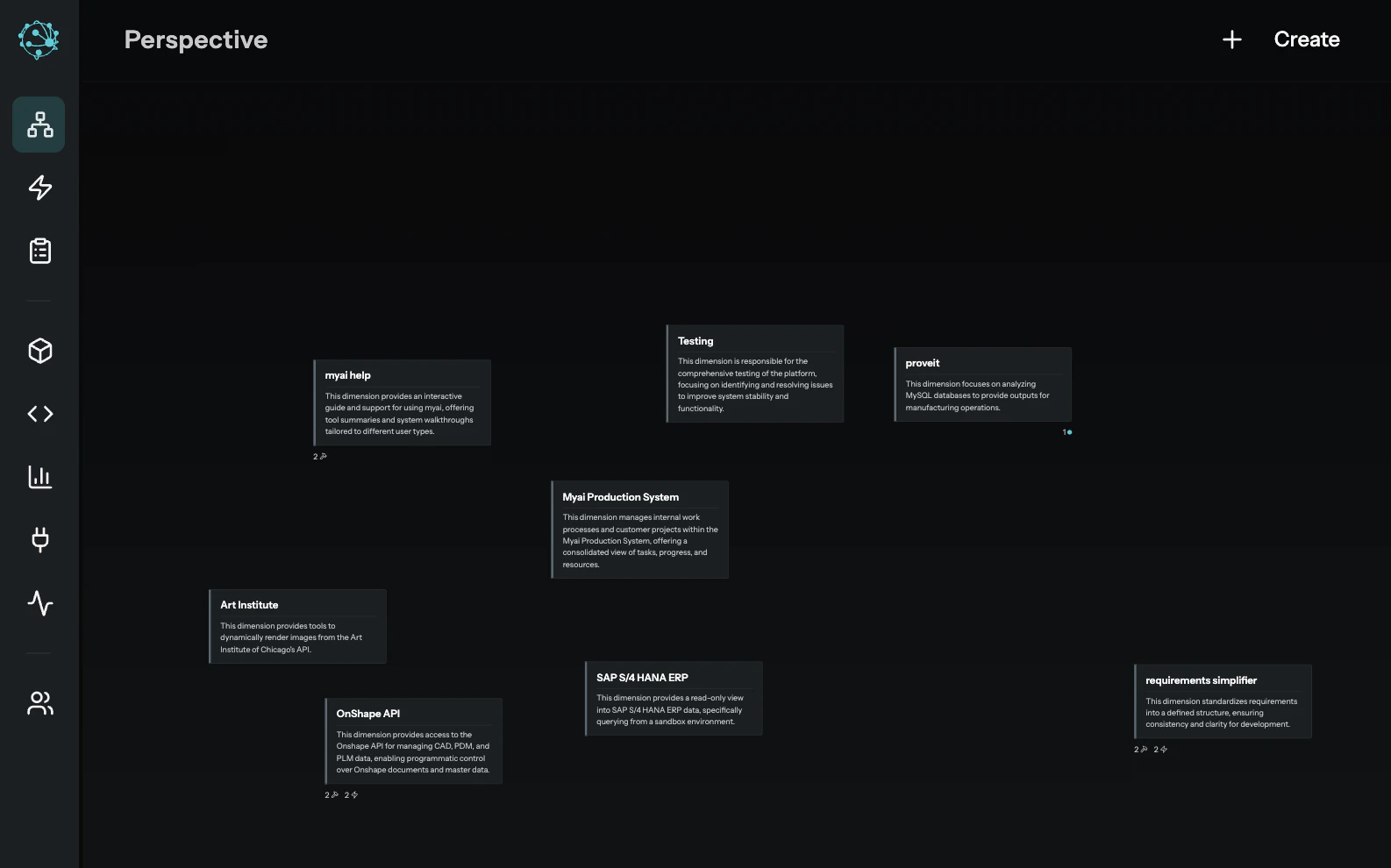
The Four Pillars
1. Dimensions (The Boundary)
The Problem: An AI with access to the entire company’s data becomes easily confused and poses security risks if HR data mixes with public marketing data.The Resolution: A Dimension is an isolated workspace. It acts as the ultimate boundary. Everything else (data, skills, workflows) lives inside a Dimension. If you ask an AI in the “Sales” Dimension about an employee’s salary, it cannot answer, because that data lives in the “HR” Dimension.
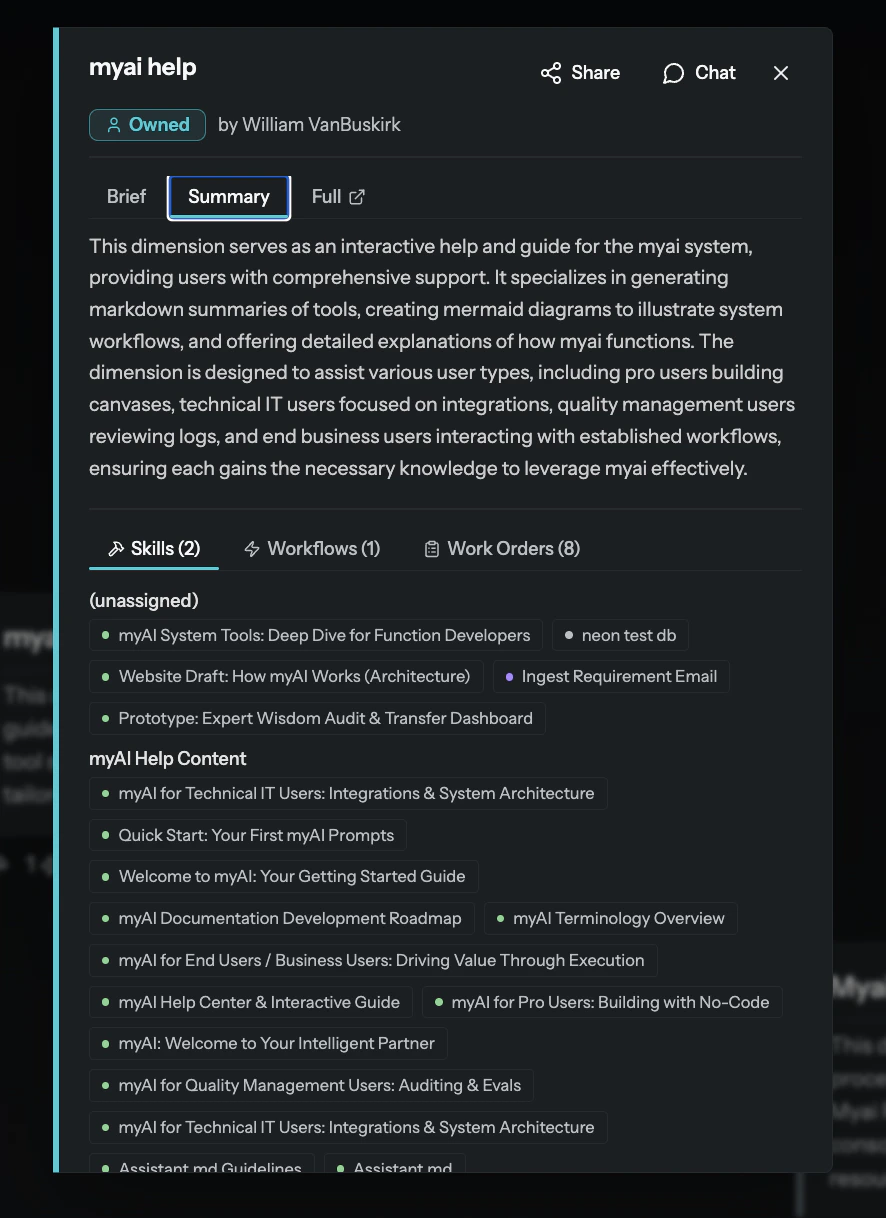
2. Artifacts (The Knowledge)
The Problem: Chat interfaces are terrible for long-term document storage. Information gets lost as the conversation scrolls away.The Resolution: Artifacts are the persistent memory of the Dimension. They can be Canvases (dashboards), Templates (structured data forms), or files. The AI reads from and writes to Artifacts, ensuring your data outlives a single chat session.
3. Skills (The Capabilities)
The Problem: Out of the box, LLMs can write text but they can’t natively update Salesforce, parse specific legal documents, or query your BigQuery database.The Resolution: Skills are modular, cross-dimensional toolkits. A Skill bundles related Artifacts (Functions, Canvases, Templates) under a meaningful name and can be applied to any Dimension. If both Sales and Marketing need CRM access, you create one “CRM Integration” Skill and apply it to both — shared capability, separate context.
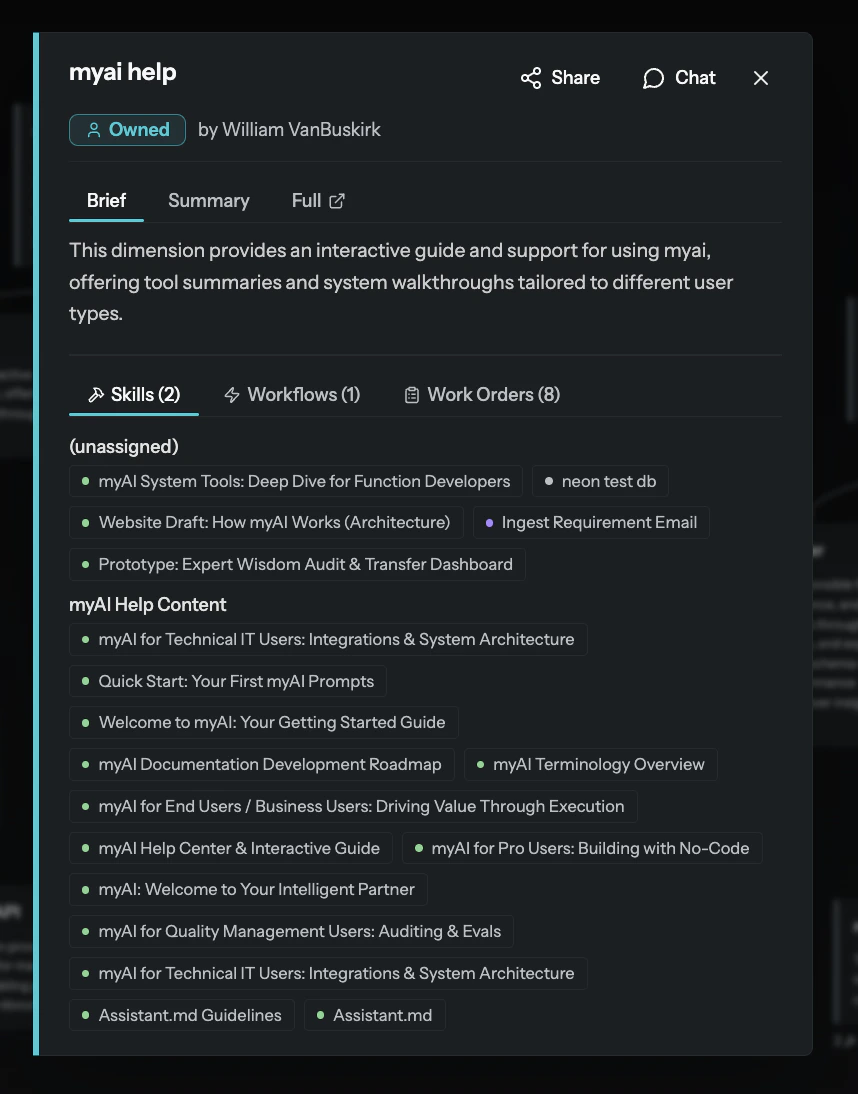
4. Workflows (The Engine)
The Problem: Manually prompting the AI for routine, multi-step tasks every day is inefficient and prone to user error.The Resolution: Workflows are automated, multi-step sequences. They string together Skills and Artifact interactions so that a trigger (like an incoming email or a webhook) results in a fully automated outcome.
Inter-Agent Delegation: Attunements
Most AI agent architectures treat agents as isolated silos. MyAi is different — Dimensions can delegate work to each other through Attunements. An Attunement is a formal contract between Dimensions. It defines: “I (Sales Dimension) provide this service (Lead Qualification) if you provide these inputs.” This allows a network of specialized agents to collaborate reliably without human hand-holding at every step. Example: The Marketing Dimension receives inbound leads and uses an Attunement to delegate qualification to the Sales Dimension, which applies its own scoring criteria and returns a qualified/unqualified verdict — all automated, all auditable via Work Orders.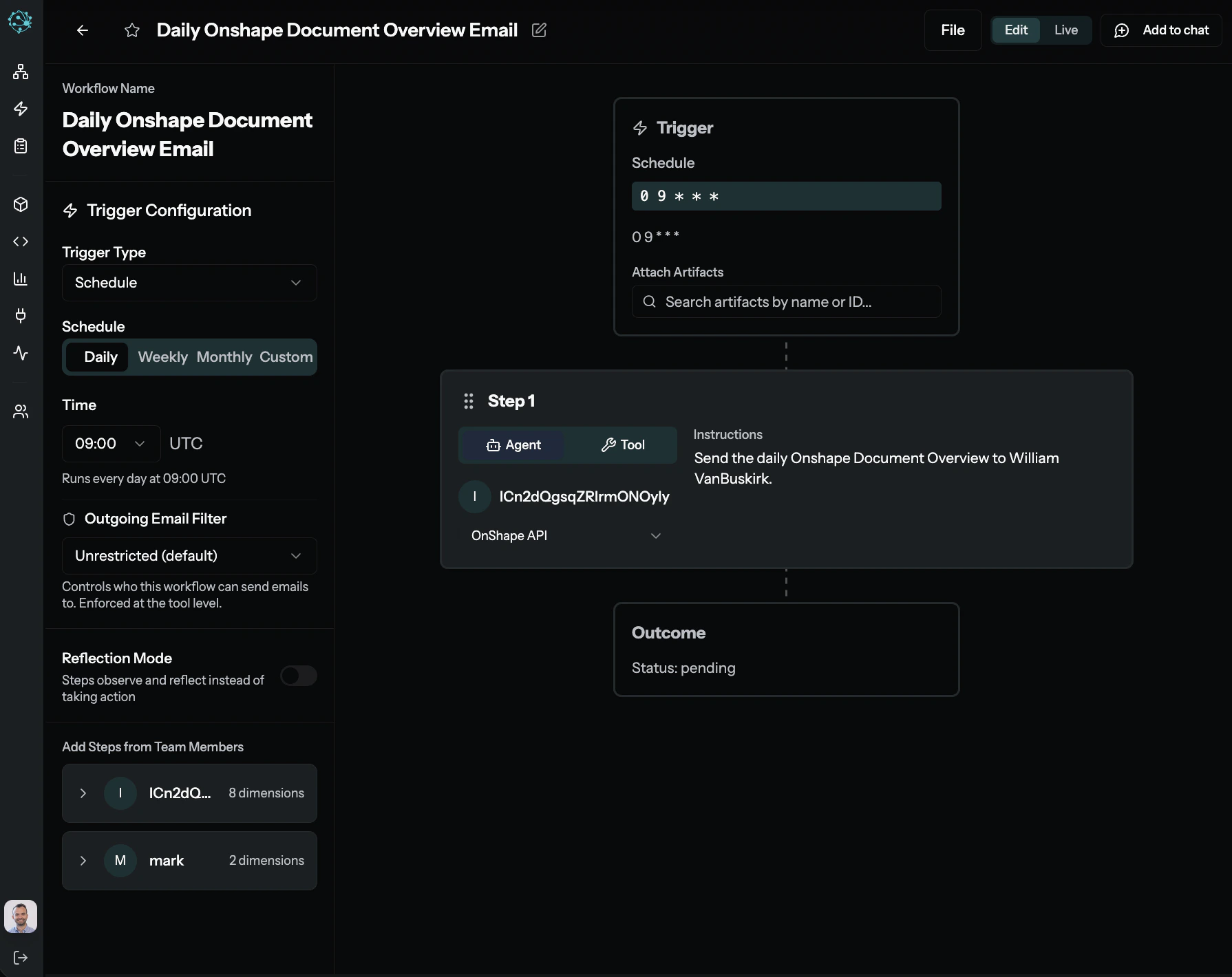
Example: The Manufacturing QA Dimension
Imagine you set up a Quality Assurance Dimension for a manufacturing plant.- The Dimension ensures the AI only sees plant data, not corporate payroll.
- The team creates incident reports. These reports are stored as Artifacts.
- You give the AI the Skill to search historical incident reports and the skill to ping the maintenance team’s Slack channel.
- Finally, you create a Workflow: When an engineer files an incident report (Artifact) tagged “Critical”, the AI uses its Slack integration (Skill) to alert the team immediately.